

Adjusting the aperture
A tragedy in close-up

Nothing in life ever makes sense up close. And yet here I am, nose pressed up against the page, trying to decipher every blurry character, every black mark that dreamed itself as a word, a thought, an idea.
“Life is a tragedy when seen in close-up, but a comedy in long-shot.”
Charlie Chaplin said that.
In a way, he was speaking quite literally. You can change the entire dynamics of a story based on how you choose to frame it. I think that’s why I love the work of directors like Zach Cregger—filmmakers who are always playing with distance, and in so doing, playing with tone. With the context and background blurred, the terror of our first person view of reality and its incumbent distortions grips us. But when we’re made small within our own frame, the absurdity of it all is writ large—painted across the scene like a watercolor wash of uncanniness.
I always want to know what things mean, but what I’m really asking is to know what they will mean. It’s like trying to see how one single patch will look against the rest of a quilt before you’ve even seen all the pieces. There’s no knowing. There’s only what that patch looks like now in isolation. In the suspended animation of the present moment.
Why is it that when you look closely at things, they begin to look less real? Maybe because you have to hold things still to really look at them.
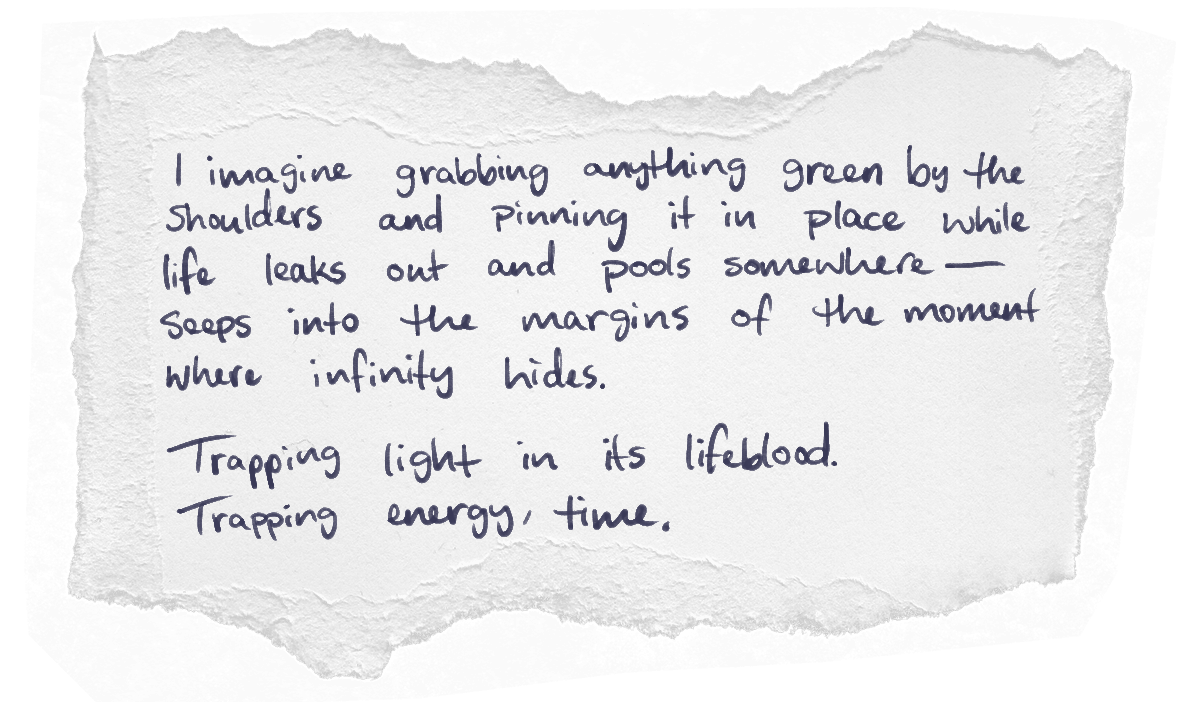
I imagine grabbing anything green by the shoulders and pinning it in place while life leaks out and pools somewhere—seeps into the margins of the moment where infinity hides. Trapping light in its lifeblood. Trapping energy, time.
Where does the life I trap go when it runs through me? Am I staking it into the ground with every step? Am I wrapping it up and burning it to get high on the vapors? Are my intestines cramping around it, pushing its warts through my bowels, extruding all of its ugliest, most useless features? Am I a machine that turns life into AI slop?
Am I a disease on this earth or am I just a carrier of dis-ease?
I re-read old journal pages and I hate the version of me who doesn’t know. I hate her desperate attempts to figure it all out and her vice-like grip on certainty. I hate her refusal to not know. I hate how flimsy she becomes when her sails deflate like punctured lungs and she floats on through the doldrums unable to sink. I hate how she forms like thick layers of ice upon the water, obscuring what’s below.
I’m always playing with the aperture. If I could twist my inner eye like the lens of a camera, bursting all the blood vessels, and wrench myself out of this first person perspective, what would I see? What does this trash heap look like to anyone but me?
Things get smaller and then they get bigger. I see the details and then I see them splattered out on the pavement before me, misshapen in a pile—I retch them up.
Sometimes I am in the scene and sometimes I am walking over it, above it. A cloud floating over pavement puke. I notice the rotten shade of chartreuse I love bears a remarkable resemblance to bile.
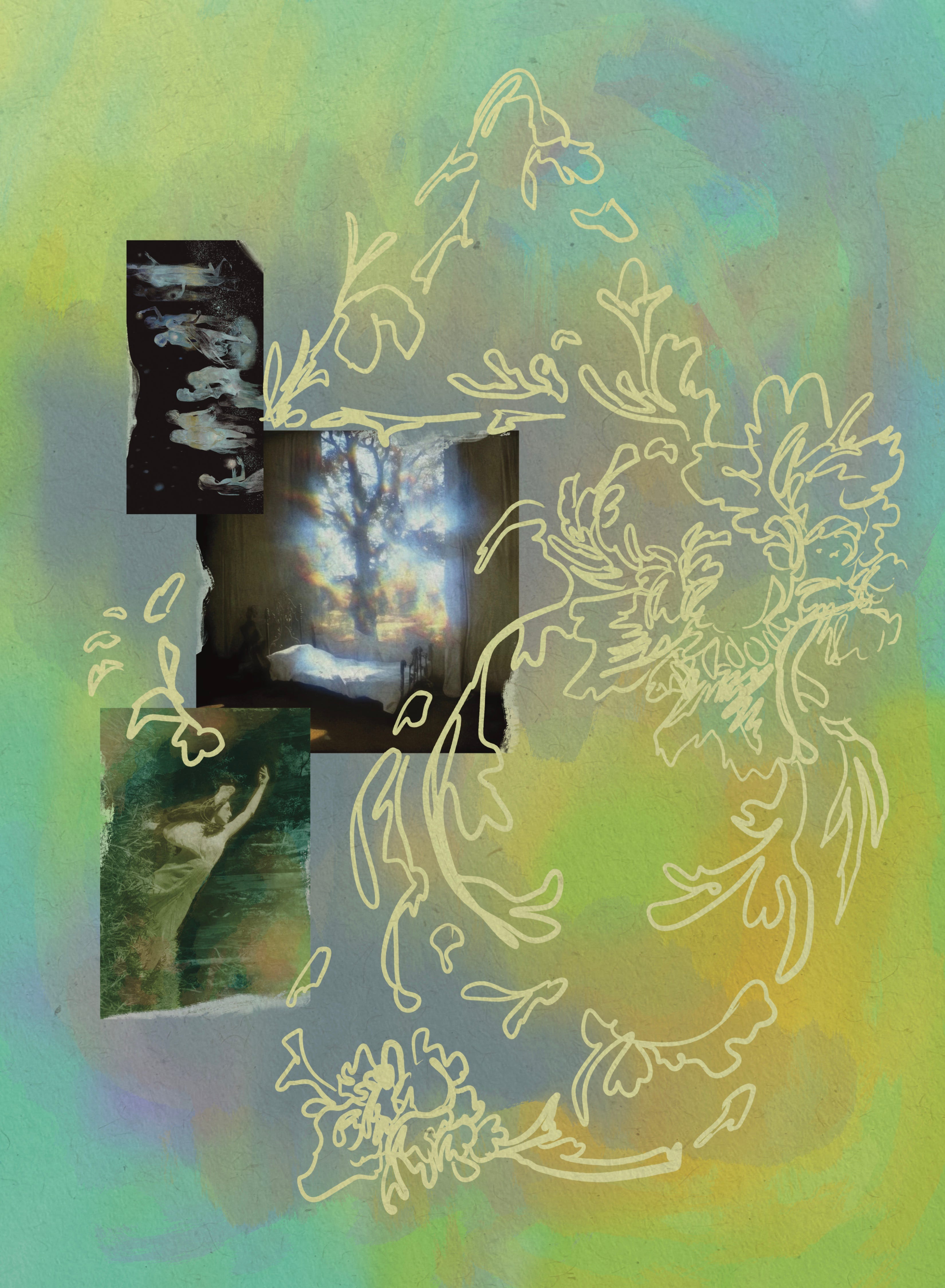
Despair seems such a waste of time and energy. My hope and determination shriveling into rage and resentment and refusal ring like a clanging against prison bars that were actually safety rails. Pointless. Ignorant. A failure of perspective. Cut to wide shot.
You know what does feel like a good use of time and energy? Confusion. Because within confusion there is Mystery. And within Mystery there is life—unfettered, unspoiled, figuring itself out.
When you light bile correctly, it looks like antifreeze. It looks like chlorophyll run-off. It looks like the blood of everything green and pulsating with life that you can’t pin down. And I love it more before it comes fully into view. I love it when it is held tight in close-up, drenched in sunlight, trapping time. I love it best before any meaning can be assigned to it.
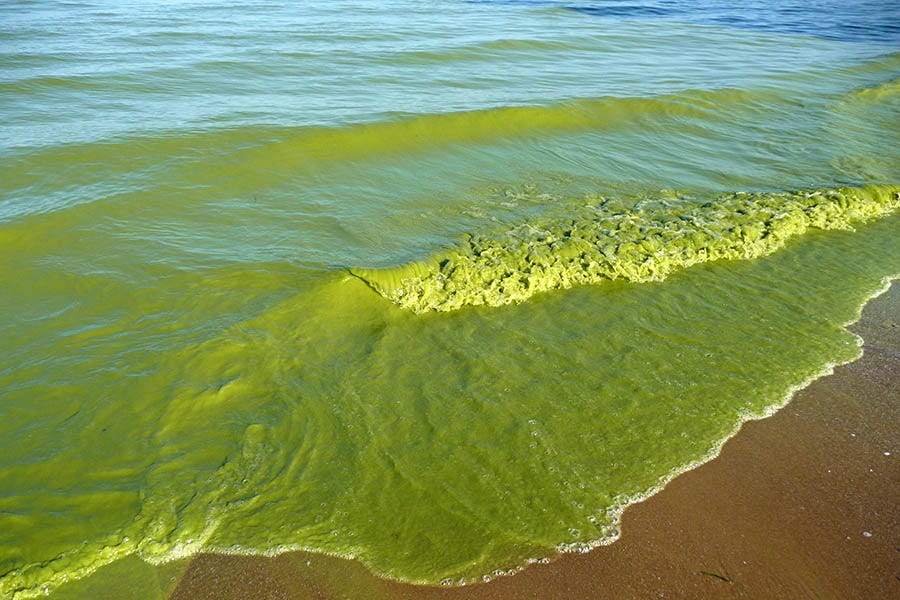
Just like men love beautiful women before they speak. Just like mothers love beautiful babies before they declare themselves “I.” Just like life loves a warm womb when it is suspended in pieces and parts within the bloody waters.
No one regrets being born when they’re still covered in placenta.
It’s when we’re unplugged from creation, the mess of life showered away, that we see ourselves shrinking in our own frame—set pieces on a larger stage.
It’s in those moments we crouch down willingly and ask the god in the machine to unmake us.
Special thanks to Adriana Michelle for supporting this publication. <333

Can I kiss your brain?
love this soo much 🥹🥹